 Voyager
The Hardest Part of an AI Cockpit Is Knowing When Not to Act
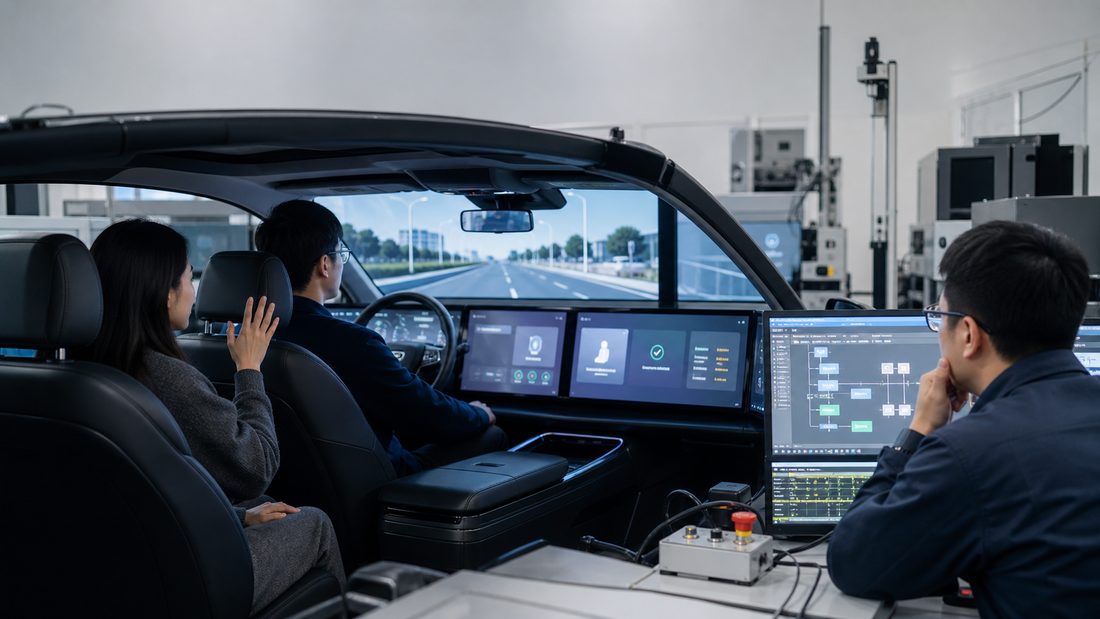
The easiest part of an AI cockpit demo to show is conversation. A user says it feels hot, the system adjusts the climate. A user asks for coffee, the system recommends a route. The demo looks smooth.
The real question is harder: what happens when the system should not act?
In a vehicle cabin, voice, screens, cameras, seats, climate, lighting, navigation, and driving state all share the same physical space. A command from the rear seat may conflict with the driver’s preference. A joke may sound like a control command. A comfort request may arrive during a safety-critical driving moment.
A strong smart cockpit prototype should validate not only whether the AI understands a sentence, but whether it can decide when to execute, when to ask for confirmation, and when to stay silent.
Shanghai Yuexing Wanli Intelligent Technology Co., Ltd. / VoyagerX helps teams build AI smart cockpit demos and functional cabin prototypes that test these real interaction conflicts through experience scripts, HMI states, vehicle-control feedback, hardware-software integration, and physical demo delivery.

Scan with WeChat, then share via the ··· menu